Safe Unlocking


Table of Contents

Safe Unlocking Service in Dubai

Getting locked out of a safe is one of those situations that creates a specific kind of frustration — the contents are right there, inches away, completely inaccessible until the lock cooperates. Whether it’s a forgotten combination, a dead battery on an electronic lock, a key that’s been lost, or a mechanism that’s jammed, the experience is the same: the safe is doing exactly what it was designed to do, which is refuse to open for anyone who doesn’t have the right credential.

What distinguishes professional safe unlocking from what happens when people try to force a stuck safe themselves is the difference between a calculated, targeted approach that takes a few minutes and leaves the safe fully functional, versus damage to the locking mechanism, the door, or both that can make a subsequent professional opening significantly harder and more expensive.

This page covers the types of safe faults we handle, how professional opening actually works for different lock types, and when repair or lock replacement makes sense after the safe is open. Contact us at 0581873002 or 0581873003 for immediate assistance.

Professional locksmith opening a wall safe in Dubai property

Types of Safes and Their Specific Lock Mechanisms

Safes aren’t all built the same way, and the lock type on a safe determines almost everything about how a locksmith approaches it when something goes wrong. Understanding which type of lock is on your safe helps explain why the solution isn’t the same across different models.

Electronic keypad safes

Electronic keypad safes have become the most common type in Dubai homes and hotel rooms over the past fifteen years, largely because they’re convenient — no key to lose, the combination can be changed, and the indicator lights make them easy to use in a dark room. The tradeoff is a dependency on battery power, which creates one of the most common lockout scenarios: the battery dies while the safe is locked, the display shows nothing, and there’s no way to enter the combination.

Most electronic safes have an external battery contact (usually under a cover plate on the front or at the bottom of the safe) that allows a 9-volt battery to be held against the terminals temporarily, providing enough power to enter the code and open the safe. This is worth checking before calling a locksmith, because if the contact is accessible and you know the code, it resolves the situation without any professional intervention.

When the battery isn’t the issue — when the code is forgotten, the keypad has malfunctioned, or the internal mechanism has faulted — the approach depends on the safe’s model and whether a manufacturer emergency override exists. Some electronic safes have a mechanical override key cylinder hidden behind the electronic panel; others require manufacturer-specific diagnostic equipment to reset the electronics and allow the safe to be opened without the original code.

Combination dial safes

Mechanical combination locks — the rotating dial type associated with traditional bank vaults and older high-security safes — are the most secure of the common lock types but also one of the more forgiving from a locksmith’s perspective when the combination is forgotten. A skilled locksmith can manipulate the internal disc pack to identify the combination through careful technique, allowing the safe to be opened without any drilling or damage. This process requires experience and time, but leaves the lock completely intact and functional.

The failure mode that makes mechanical combination locks genuinely difficult isn’t forgotten combinations — it’s mechanical damage, particularly worn or broken parts inside the lock disc pack. A combination lock that’s been repeatedly forced (someone trying combinations that don’t work and applying heavy pressure to the handle each time) can break internal components in a way that prevents the discs from moving correctly even when the right combination is entered. In these cases, the safe typically needs to be opened by other means and the lock replaced.

Electronic combination safes with digital display

Some mid-range safes combine a digital display with a mechanical dial rather than a keypad. These typically still use a battery for the display, but the lock mechanism may be partly electronic or fully mechanical. The important distinction here is that a digital display showing the entered combination doesn’t mean the lock is electrically actuated — some models simply display the number sequence while the physical locking mechanism is entirely mechanical. Understanding which type you have is relevant because the opening approach differs.

Key lock safes

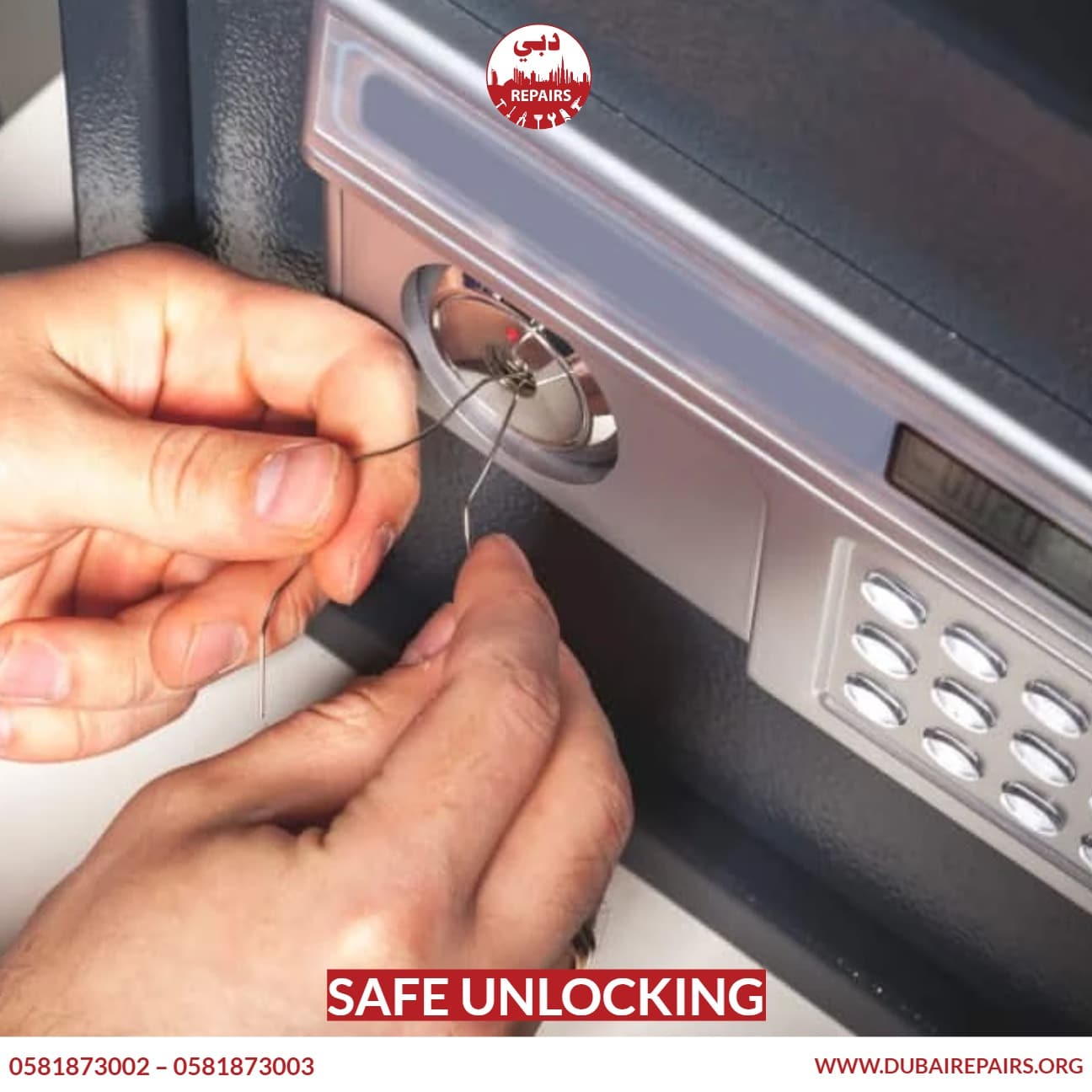
Simpler safes — smaller home models, document boxes, and some fire-resistant boxes — use a keyed cylinder rather than a combination. A lost key on these safes means picking or bypassing the cylinder, which on lower-security models is straightforward for a locksmith, or drilling as a last resort on higher-security cylinders. One common approach for quality key-locked safes is impressioning — a technique that produces a working key from a blank without drilling, leaving the lock intact and fully functional.

Biometric safes

Fingerprint-reading biometric safes are popular for quick access to personal items. Their primary failure modes are sensor issues (a finger that’s wet, very dry, or slightly cut may not scan consistently), software errors following a firmware update or power interruption, and flat batteries. Most biometric safes have a keypad backup code as a secondary means of access, and some also have a mechanical key override. When all of these fail, the electronic control board has typically faulted and requires professional access.

Fire-resistant document safes

Fire-resistant safes are constructed differently from standard security safes — the fire-resistant inner lining between the outer shell and the inner compartment makes them heavier and means the wall section is significantly thicker than a standard safe. This matters for the professional opening process because drilling locations and depths that work on standard safes don’t translate directly to fire-resistant models, and incorrect drilling through the fire-resistant layer can be much harder to repair than a standard safe.

Locksmith with professional safe opening tools in Dubai

Common Situations That Need Professional Safe Unlocking

Forgotten combination or PIN code

The most common call. On mechanical combination locks, our locksmith service can manipulate the lock to determine the combination without drilling. On electronic safes, the approach depends on whether there’s a factory reset option, a manufacturer override, or whether the electronic unit needs to be bypassed and the safe accessed through alternative means, after which the code system is typically replaced.

Dead or failed electronic lock

An electronic lock that doesn’t respond — blank display, no reaction to keypad input, or a display that shows error codes — is usually a battery issue, a control board fault, or a wiring connection failure between the keypad and the locking bolt mechanism. The safe may have been locked with a working code; the electronics are simply no longer communicating with the mechanical bolt. Professional diagnosis identifies whether the fault is in the battery circuit, the board, or the connection, and the safe is opened with minimum intervention.

Malfunctioning bolt work

Sometimes the locking bolts themselves seize or jam in the extended position even when the lock signals that it should be unlocked. This happens on safes that haven’t been used for extended periods (the bolt mechanism stiffens or corrodes), on safes that have been moved and the door or body has slightly distorted under load, or on electronic safes where the solenoid or motorised bolt actuator has failed. Opening a safe with jammed bolt work is one of the harder technical challenges, since the lock itself may be working correctly but the bolts won’t retract.

Lost or broken key

For key-locked safes, professional key cutting from the lock’s code (if the manufacturer code is available on the documentation that came with the safe) is the most non-invasive solution. Without the code, picking or impressioning provides a working key without drilling. A key that’s broken inside the lock requires extraction before any new key can work.

Inherited or second-hand safes without documentation

Acquired safes — from an estate, a property purchase, or a second-hand purchase — often come without the original combination, key, or manufacturer documentation. Professional opening of these safes follows the same technical approach as any other lockout; the absence of documentation doesn’t change the method, just means the process starts without any useful reference points for the combination or key code.

Hotel safe lockouts

In Dubai’s hotel sector specifically, we get regular calls from hotel maintenance teams for in-room safes that have been locked by a guest who’s checked out, lost a personal code, or whose phone-based code system has failed. Hotel safes typically have a manager override code, but when this also fails or hasn’t been documented, professional opening is required. We work alongside hotel maintenance teams for these situations and understand the discretion required around hotel property.

How Professional Safe Opening Works

There’s a meaningful difference between professional safe opening and forcing a safe open. Professional techniques are chosen based on the specific lock type and fault, and they aim to leave both the safe body and the lock mechanism intact and reusable wherever possible. Forcing — drilling, grinding, or using a pry bar — is a last resort used when the lock itself has been physically damaged in a way that rules out non-destructive access.

Manipulation of mechanical combination locks

Combination lock manipulation involves listening to and feeling the internal disc pack while rotating the dial, identifying where the notches on each disc are positioned relative to the lock’s gate. A skilled manipulator can work through the combinations systematically without needing to know the original setting, and the process leaves the lock completely intact and functional with the original combination still set. This requires training, experience, and specific tools, and takes considerably longer than other methods — typically 30 minutes to several hours depending on the lock — but it’s the cleanest outcome for a high-quality combination lock.

Electronics override and board reset

For electronic safes with a manufacturer override capability, specific codes or procedures supplied by the manufacturer allow the lock to be opened and the code reset. This requires manufacturer-specific knowledge and sometimes documentation verification. For electronic safes where no override exists, the control board may be bypassed using diagnostic tools that directly actuate the solenoid or motorised bolt, opening the safe while leaving the mechanical parts intact, after which the electronic unit is replaced.

Picking and impressioning

For key-locked safes, picking manipulates the cylinder pin tumblers to simulate the effect of the correct key. Impressioning creates a working key by making an impression of the internal pin positions in a blank key through a series of controlled movements. Both techniques leave the cylinder intact and functional with no marks on the safe body.

Controlled drilling as a last resort

When non-destructive methods aren’t viable — because the lock has been physically damaged, the bolt work is mechanically seized, or the specific model has no manipulation or override pathway — controlled drilling through a precisely targeted location in the safe body or door allows a viewing port or manipulation point for the lock mechanism. This approach is only used when non-destructive access genuinely isn’t possible, and the drilled section is repaired or the lock replaced once the safe is open.

After Opening — Repair, Lock Replacement, or Combination Reset

Once a safe is opened, the logical next step depends on why it was closed in the first place.

Forgotten combination or PIN — reset and re-document

If the safe was opened because of a forgotten combination and the lock itself is intact, the combination should be reset and documented somewhere secure — not written on a sticky note inside the same room as the safe, and ideally stored with a trusted person or in a secure password manager. The safe is then tested through several locking and unlocking cycles to confirm it’s functioning correctly before being reloaded.

Failed electronic unit — replacement

If the electronic lock has been bypassed or has failed in a way that prevents normal function, the electronic unit is replaced rather than repaired. Most electronic safe locks are modular — the keypad, display, and control board are a single replaceable assembly. Matching the replacement to the safe model ensures the new unit fits the existing bolt actuation mechanism without modification.

Mechanical lock damage — full lock replacement

A mechanical combination lock whose internal disc pack has been damaged — from forcing, from wear, or from being dropped — needs to be replaced rather than repaired. The lock is removed from the safe door and a replacement fitted and re-dialled to a new combination. The safe lock repair service covers this as a standard procedure.

60+ Vehicle Fleet — Immediate Response Across All of Dubai

A safe lockout is inherently time-sensitive — whatever is inside is needed now, not in three days when the next available slot opens up. Dubai Repairs runs more than 60 fully equipped service vehicles positioned across the city at all times. This isn’t a central depot operation where one or two mobile locksmiths cover the whole emirate; vehicles are already positioned across different districts, which is what makes same-day and same-hour response realistic rather than aspirational.

Safe opening tools, electronic bypass equipment, manipulation tools, and common replacement lock units are carried in service vehicles as standard. A locksmith despatched from a vehicle already near your location in Jumeirah, Deira, Business Bay, Mirdif, or the outer communities doesn’t need to return to a depot before heading to you, and doesn’t carry tools that are unsuited to the safe type once the model is confirmed on your call. For genuine time-sensitive situations — an important document needed urgently, access required before a flight, or a hotel safe blocking a checked-out guest’s belongings — this positioning difference is material.

Dubai Repairs locksmith service vehicle ready for safe unlocking across Dubai

Brands and Models We Work With

Dubai’s residential, hotel, and commercial market runs a fairly consistent range of safe brands. The most common ones we encounter are Yale, Godrej, Master Lock, Phoenix, Burton, and generic Chinese-manufactured hotel room safes supplied under various trade names. The specific opening approach for each differs — Yale electronic safes have a particular override pathway, Phoenix fire-resistant safes have specific drilling protocols that differ from standard metal safes, and hotel-grade safes typically have a documented maintenance override that hotels sometimes lose track of.

If you’re calling about a brand or model you’re not certain about, having the make and model number from the safe’s label (usually inside the door once open, but sometimes on a plate on the rear or bottom of the safe) helps us confirm which tools and approach are appropriate before the technician arrives.

What You Can Try Before Calling

A few things are genuinely worth checking first, since they resolve a proportion of electronic safe lockouts without requiring a professional:

  • Check the battery contact method on your specific model. Most electronic safes have an emergency external power point — a recessed contact, usually under a cover plate on the front or at the base — that accepts a 9-volt battery held against the terminals. This allows the keypad to function without the internal batteries, and if you still know the code, the safe opens without any intervention.
  • If the display is showing an error code rather than being blank, note the specific code and check the manufacturer’s manual or website — some error codes indicate simple states (too many wrong entries locking out the keypad for a set time) that resolve themselves without professional access.
  • For mechanical combination locks, double-check the starting position and direction sequence — many people find the issue is that they’re not beginning the rotation from the exactly correct starting point or are reversing direction at the wrong point rather than having forgotten the combination itself.

If none of these apply or they don’t resolve the situation, the fault is one we need to assess and open professionally.

Contact Dubai Repairs for Safe Unlocking in Dubai

Call or WhatsApp us at 0581873002 or 0581873003 and we’ll confirm attendance and response time — typically same-day for most of Dubai and often within the hour for areas close to our nearest vehicle.

Frequently Asked Questions

Can you open a safe without drilling or damaging it?

In most cases, yes. Mechanical combination lock manipulation, electronic override, picking, and impressioning are all non-destructive techniques. Drilling is only used when the lock has been physically damaged or the specific model has no viable non-destructive access pathway.

How long does professional safe opening usually take?

Electronic safes with a dead battery or a known override pathway are typically opened in under fifteen minutes. Mechanical combination manipulation takes longer, usually thirty minutes to a few hours depending on the lock type and condition. Drilling, when necessary, is typically thirty minutes to an hour but requires more repair work afterward.

What information should I have ready when I call?

The safe make and model if visible, the type of lock (keypad, dial, key, or biometric), what the problem is (forgotten code, dead battery, jammed, key lost), and your location. If you have any manufacturer documentation including model numbers, that’s useful but not essential.

Can you reset the combination after the safe is opened?

Yes, combination reset or new code setup is part of the service on most lock types once the safe is open and the lock is confirmed functional.

My electronic safe shows an error code and won’t accept my combination. What does that mean?

Error codes vary by manufacturer, but common ones indicate too many wrong entry attempts (which triggers a lockout period that clears itself after a set time) or a low battery state where the lock won’t operate even though the display shows. Note the specific code and call us — we can usually advise whether it will clear itself or requires professional access before attending.

Can you open a hotel room safe that’s been left locked after checkout?

Yes. Hotel safe work is part of our regular service. If the hotel’s manager override code isn’t resolving the issue, we work directly with hotel maintenance teams for professional access.

What happens if the lock is damaged during a DIY opening attempt?

Damage to the lock mechanism — particularly bent bolt work or a broken disc pack in a mechanical combination lock — makes professional opening harder and potentially more invasive than it would have been before the attempt. The honest answer is that attempted DIY opening, particularly using pry bars or excessive force on the handle, does sometimes make the subsequent professional process more involved. Call before attempting to force a safe.

Do you service all areas of Dubai?

Yes, all areas including Downtown, Marina, JBR, Deira, Mirdif, Al Barsha, JLT, Business Bay, and outer communities are covered. Response times vary by location but same-day attendance is realistic across all of Dubai given how our vehicles are positioned.

Follow us on Instagram & Facebook

Visit our other websites for more services:

Carpenter Dubai, Glazier Dubai, MRD, FIX IT UAE, Plumber Dubai, Painter Dubai, Bicycle Service

Our Partner Locksmith Sites

Locksmith DXB

“Locksmith DXB” is the best locksmith service available in Dubai. We offer residential, commercial & automobile locksmith services in every corner of Dubai.

Locksmith Dubai

Locksmith Dubai service provide the locksmith services in Dubai, we have professional and experienced locksmiths which will solve all your problems related to locks and keys.